
How to Choose the Right Gear for Beginner Wing-Foilers(And Why Bigger Is Usually Better)
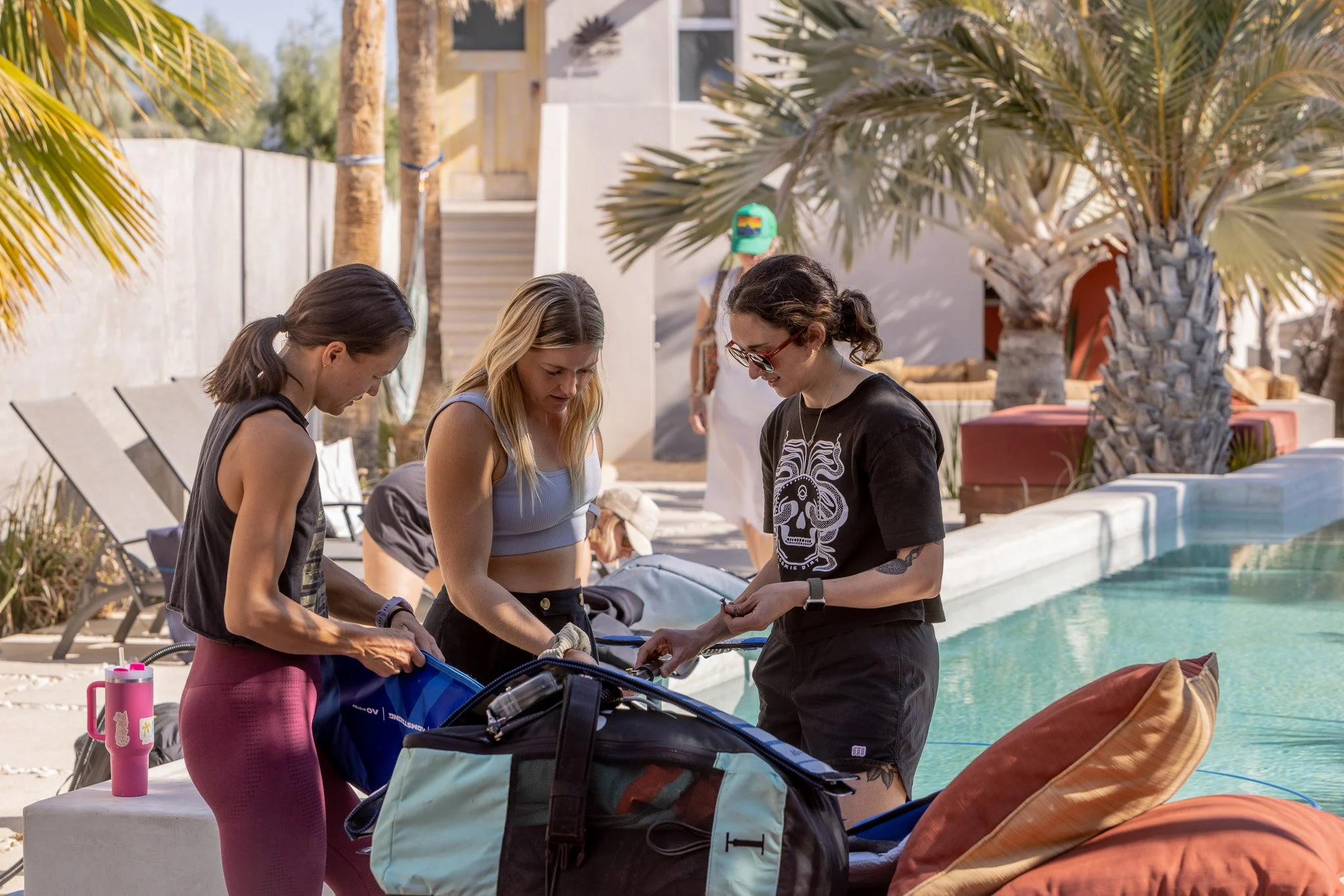
One of the biggest reasons beginners struggle with wing-foiling isn’t lack of talent or strength — it’s simply being on the wrong gear.
Choosing the right setup can literally cut your learning time in half, make your first sessions way more fun, and save you from unnecessary frustration. Let’s break down the basics so you can start wing-foiling with confidence.
1. Start With a Bigger Board (Yes, Bigger Than You Think)
When it comes to beginner wing-foiling, size matters — especially board volume.
While your exact board size is weight-dependent, the general rule of thumb is:
Bigger is better when you’re learning.
A stable board helps tremendously with:
• Balance
• Getting to your feet
• Taxiing
• Controlling the wing
• Building confidence
For most beginners, a 140-liter to 160-liter board will make your first sessions far more successful.
Important note:
You don’t necessarily need to buy a board this big long-term. A larger board simply helps your body learn the fundamentals faster. Once your balance and board control improve, transitioning to a smaller board becomes much easier.
Best approach:
• Rent a bigger board
• Or take 2–3 lessons on a high-volume board
Once your body understands how to balance and maneuver, you can confidently downsize.
👉 We recommend staying away from inflatable boards when learning. While they may seem convenient, they’re generally not stiff enough, making it harder to:
• Edge properly
• Taxi efficiently
• Maintain balance
A rigid board will give you much better feedback and control.
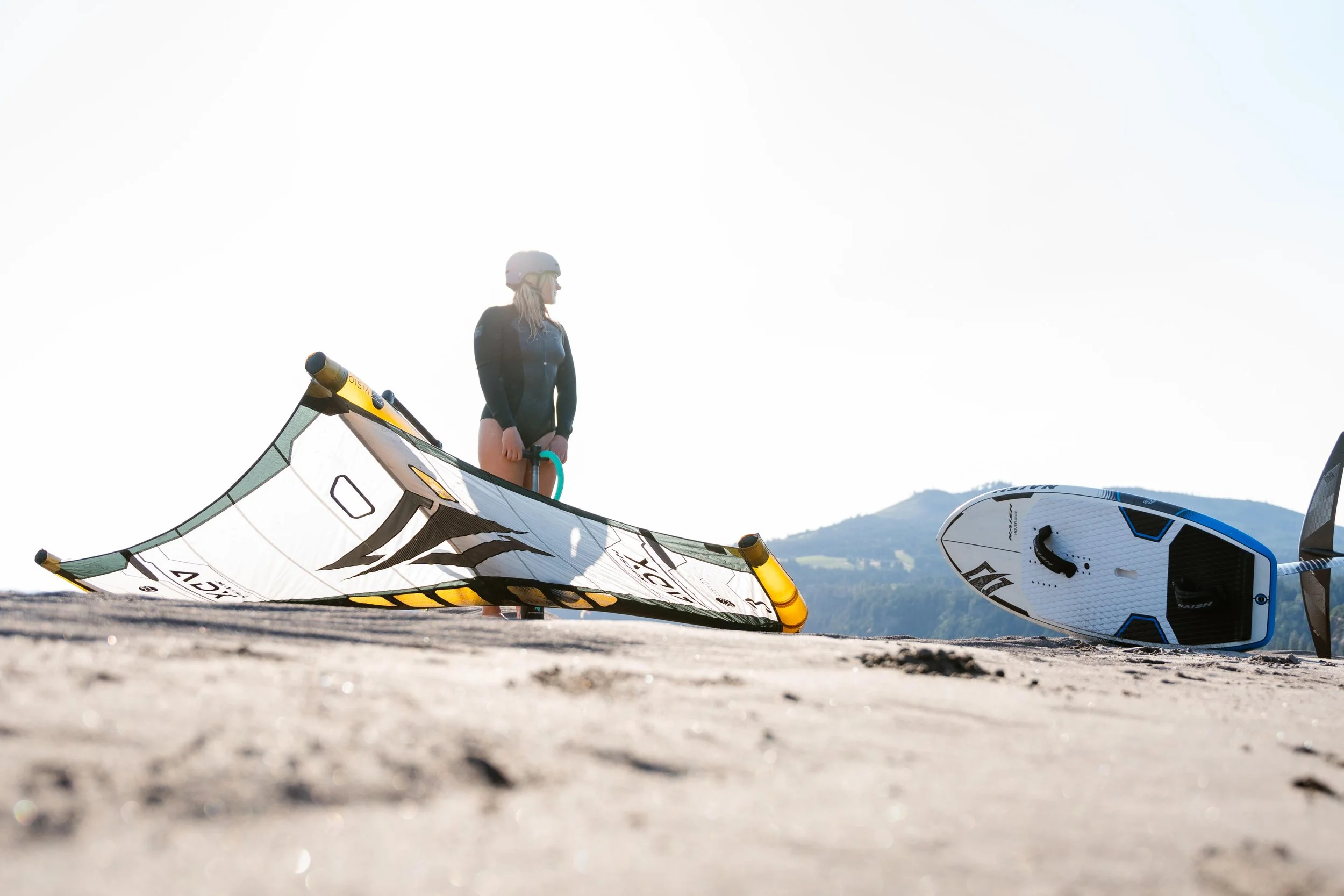
2. Choose a Big, Forgiving Front Wing
Your foil setup plays a massive role in how quickly you’ll progress.
For beginners, a large front wing is key because it:
• Lifts at lower speeds
• Feels more stable
• Forgives small mistakes
Recommended front wing size:
• 1400–2000 cm²
As a guideline:
• Lighter riders → stay closer to 1400–1600
• Heavier riders → 1800–2000 (or even slightly bigger)
This extra surface area makes takeoffs smoother and keeps you flying longer with less effort.
3. Stabilizer: Keep It Simple and Stable
You don’t need anything fancy here.
A stabilizer around 280 cm² (or in that general range) works perfectly for beginners. It provides enough stability without feeling overly locked-in and will support you as you develop better control and confidence on foil.
4. Mast Length: Shorter Is Friendlier
Mast length is often overlooked, but it matters a lot when learning.
Good beginner mast options:
• 75 cm
• 85 cm
If you’re:
• Learning from scratch
• Wing-foiling in shallow water
👉 Go with the shorter mast.
Shorter masts make crashes less intimidating, reduce the chance of hitting the bottom, and feel more manageable while you’re still figuring things out.
5. Wing Size Depends on Wind & Weight
Your wing size isn’t one-size-fits-all — it depends on:
• Your body weight
• Your local wind conditions
For example:
I weigh 140 lbs and wing in Hood River, Oregon, where the wind typically ranges between 20–30 mph. My go-to wing sizes are:
• 3 m
• 4 m
In lighter winds, you’ll want a bigger wing.
In stronger winds, a smaller wing will feel more controlled.
When you’re learning, don’t be afraid of being slightly overpowered.
I always say:
“Power is your friend.”
Having enough power helps you:
• Get up on foil more easily
• Stay balanced
• Progress faster
Underpowered beginners tend to struggle, stall, and get discouraged — so err on the side of more power rather than less.
6. A Few Extra Beginner Tips That Make a Big Difference
• Soft handles or a boom: We recommend hard-handles or boom, you’ll have a lot more steering control.
• Helmet & impact vest: Highly recommended, especially while learning. Confidence = faster progress.
• Lessons are worth it: Even a couple of lessons can save you weeks of trial and error.
• Don’t rush downsizing: Progress happens faster when you feel stable and in control.
Final Thoughts
Wing-foiling is an incredible sport, but the learning curve doesn’t need to be painful.
Starting with the right gear — especially a bigger board and foil — will make your first sessions smoother, safer, and way more fun. Once your body learns the basics, downsizing becomes a natural and exciting next step.
If you’re unsure what to choose, ask your local shop, instructor, or coach — or better yet, try a few setups before committing.
Because when your gear works with you, wing-foiling becomes pure joy 🌊✨