
What to Expect in Your First 20 Wing-Foil Sessions(A Realistic Beginner Progression Guide)
One of the most common questions we hear is:
“How long does it really take to learn wing-foiling?”
The honest answer?
It takes time — and that’s completely okay.
Wing-foiling is a technical sport that asks your body and brain to learn something entirely new. With consistent effort, most people progress steadily over their first 1–20 sessions, but getting on foil and riding upwind can take longer than social media makes it look.
Everyone can learn to wing-foil.
Everyone progresses differently.
Let’s break down what a realistic beginner journey looks like.

Sessions 1–3: Orientation & Fundamentals
Your early sessions are about understanding the basics.
You’ll focus on:
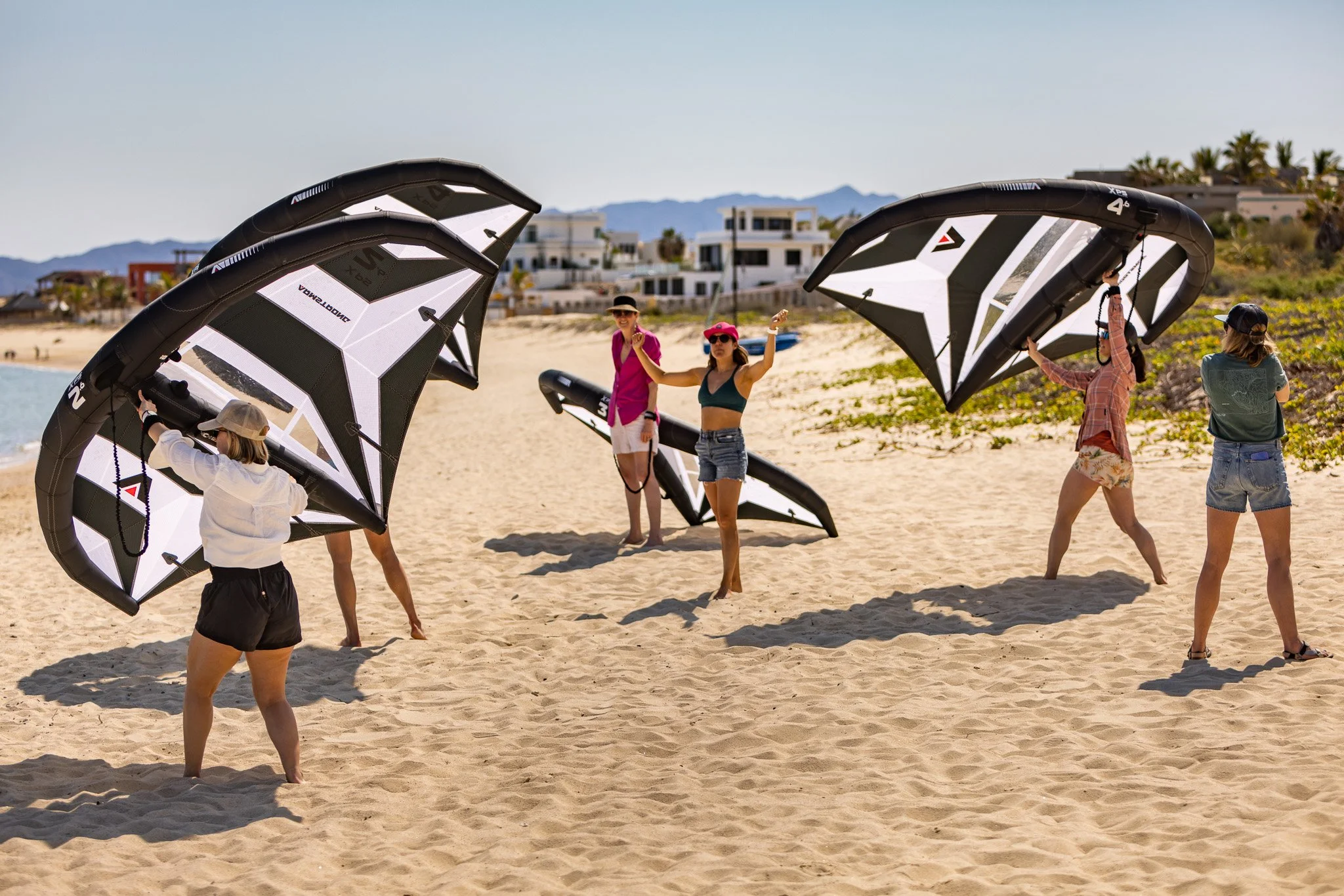
• Handling the wing on land and in the water
• Getting on the board (knees first, then standing)
• Learning how to taxi
• Turning around and managing drift
These sessions can feel tiring and mentally demanding — you’re using muscles you didn’t know you had.
Big win: Feeling more comfortable and less overwhelmed.
Sessions 4–6: Standing, Taxiing & Control
This is where balance starts to improve.
You’ll begin to:
• Stand consistently on the board
• Taxi with more control
• Understand how to sheet the wing in and out
• Manage direction and speed
You may still feel unstable, and that’s normal. Progress here is subtle but important.
Big win: Staying standing for most of the session.
Sessions 7–10: First Foil Attempts (and a Lot of Learning)
This phase can test your patience — and it’s where many beginners get stuck if expectations aren’t realistic.
You’ll likely:
• Start feeling brief moments of lift
• Accidentally pop onto foil
• Learn how sensitive the foil really is
• Struggle with consistency
Getting on foil is not automatic. It takes coordination, timing, and enough power.
Reminder: Power is your friend. Being underpowered makes learning much harder.
Big win: Short, intentional lifts onto foil.
Sessions 11–14: Controlled Foiling & Longer Rides
Now things start coming together.
You’ll begin to:
• Get on foil more intentionally
• Stay on foil for longer distances
• Learn how to control height
• Touch down and recover without crashing
Progress still isn’t linear — some sessions feel amazing, others feel frustrating.
Big win: Multiple controlled foil rides per session.
Sessions 15–18: Direction Control & Early Upwind Work
This is where wing-foiling starts to feel like riding.
You’ll work on:
• Riding both directions comfortably
• Improving stance and efficiency
• Beginning to hold ground
• Understanding how upwind angles work
Riding upwind is a skill — not something that happens automatically — and it often takes time.
Big win: Ending closer to where you started
Sessions 19–20: Confidence, Flow & Endurance
At this stage, your confidence grows significantly.
You’ll notice:
• More relaxed body posture
• Better stamina
• Improved wing control
• More awareness of wind and water
You’re no longer just surviving the session — you’re enjoying it.
Big win: Finishing sessions feeling strong instead of exhausted.
What Affects How Fast You Progress?
Progression speed varies greatly, and that’s normal
Things that can speed it up:
• Previous wind sports experience (kiting, windsurfing, sailing)
• Good fitness level and stamina
• Consistent practice
• Learning in steady wind conditions
• Using beginner-appropriate gear
Things that can slow it down (and that’s okay):
• No wind sports background
• Inconsistent sessions
• Light or gusty wind
• Being underpowered
• Fatigue
If you’ve never done any wind sports before, expect things to take longer — and know that this does not limit your potential.
A Final Reminder
Wing-foiling is not about talent — it’s about consistency.
Everyone can learn.
Everybody can do this.
Progress happens with time, patience, and the right conditions.
Celebrate small wins, take breaks when needed, and trust the process. The foil will come — and when it does, it’s worth every session 🌊💨